
Visium Far-UVC: A Breakthrough in Continuous Decontamination, Backed by VA Science
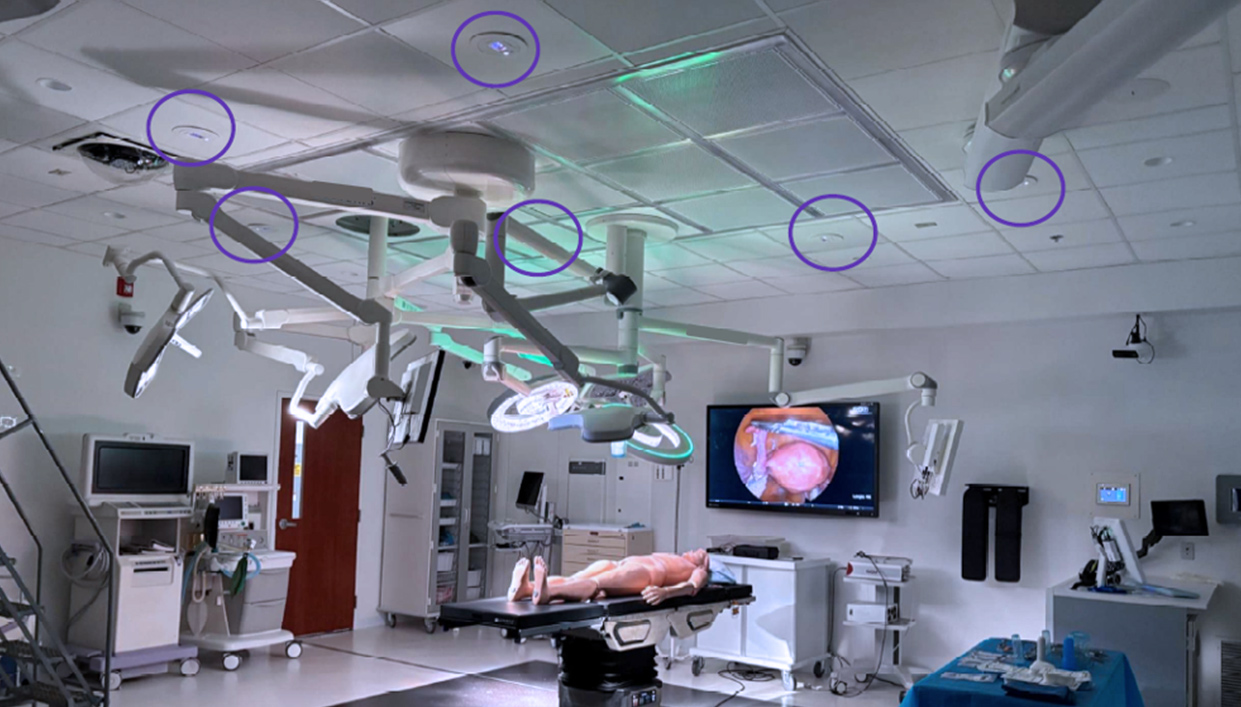
A new VA-led study, published in Infection Control & Hospital Epidemiology (ICHE), reinforces that Far-UVC is an important adjunct to infection prevention modalities. Conducted in a simulated operating room with ceiling-mounted Visium Clear Optics fixtures, the study demonstrated reductions of 99% to 99.9% of MRSA at multiple sites after 4 to 16 hours of continuous operation, with measurable impact even in partially shaded areas.
This latest publication highlights what infection preventionists and environmental services leaders have long been seeking: a practical solution that fills the gap between manual cleaning cycles to help sustain a cleaner environment of care.
At APIC 2025 in Phoenix, AZ, an expert panel of leading epidemiologists described continuous Far-UVC as the “holy grail” of infection prevention. It is a technology that continuously addresses both air and surfaces, is safe for use in occupied spaces, automated and autonomous, effective, requires no added labor, and is achievable at a reasonable cost.
Designed for every healthcare environment, especially where it matters most
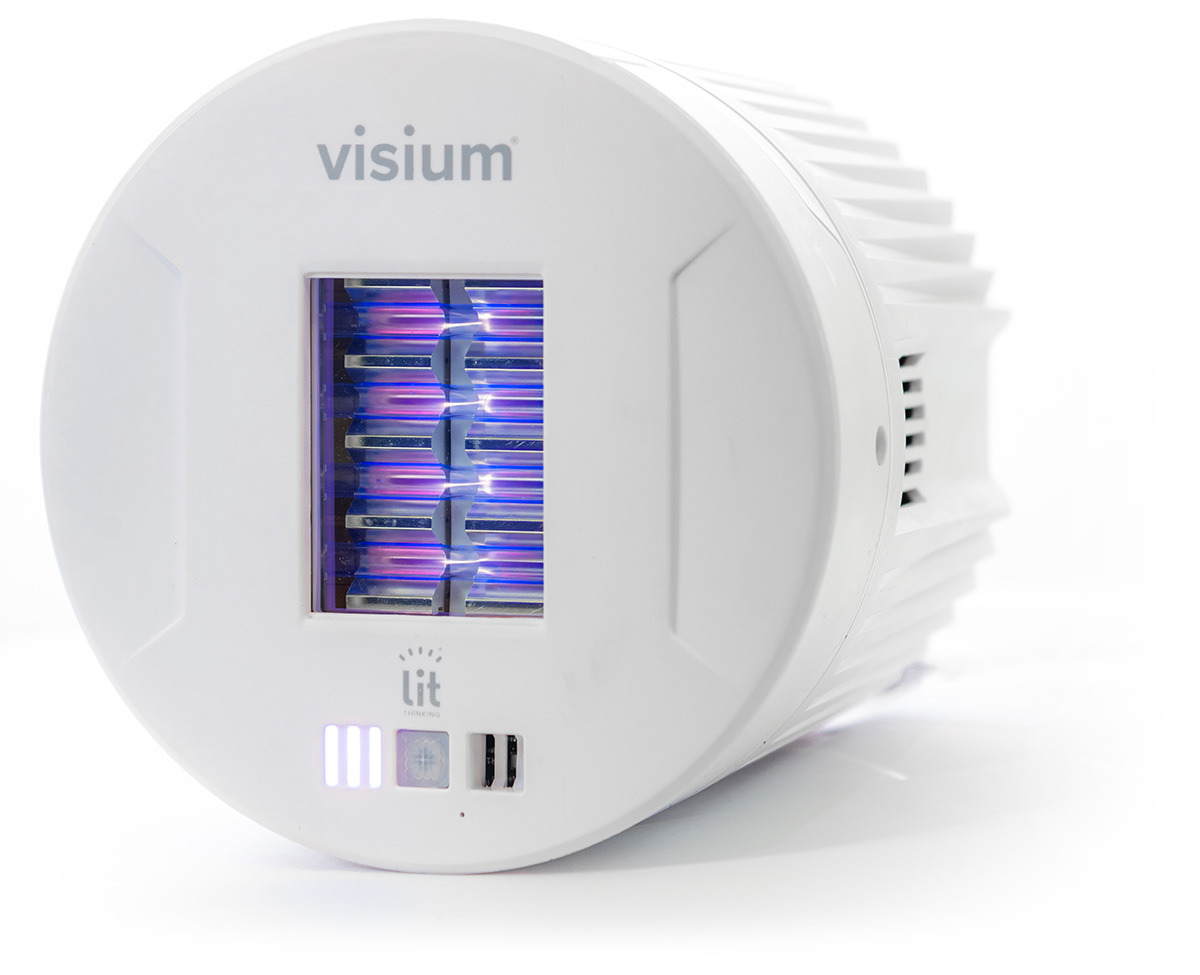
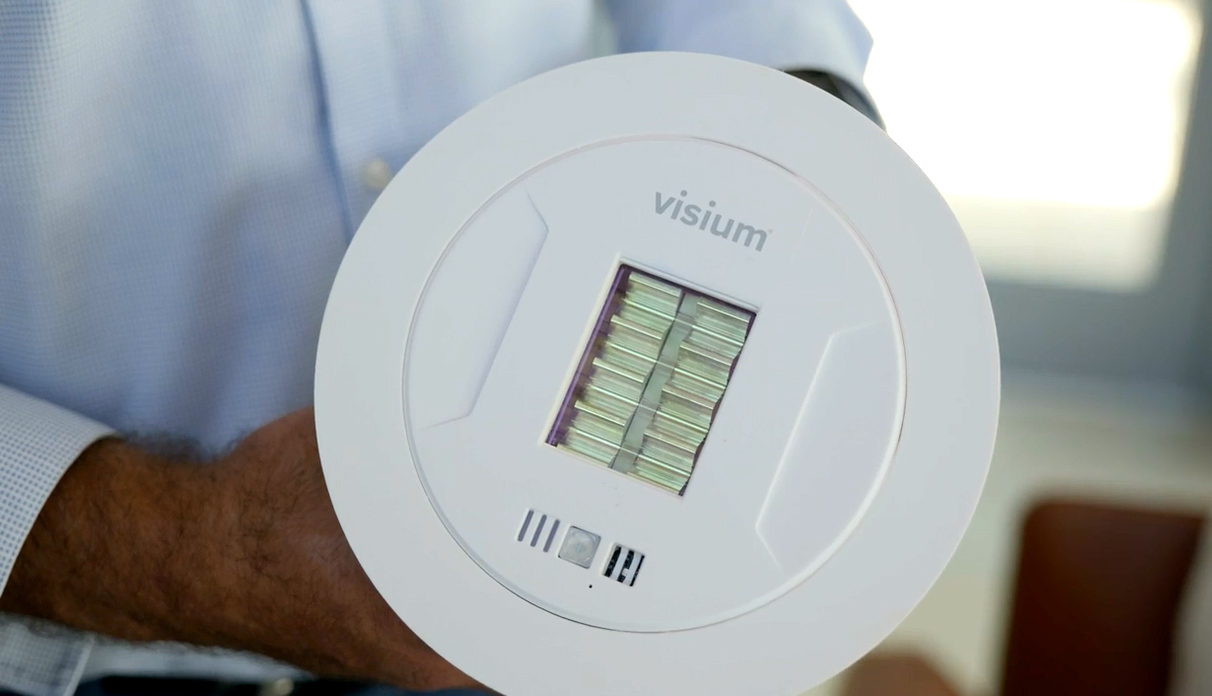
Visium fixtures are designed to integrate seamlessly into healthcare spaces. They install quickly and easily, recess into ceilings so they are completely inconspicuous, and operate silently with almost no visible light. Working in the background without disruption, they continuously sanitize the spaces where it matters most:
Operating Rooms (ORs)
Emergency Departments
Intensive Care Units (ICUs)
Patient Bathrooms
Compounding Sterile Pharmacies (CSPs)
Central Sterile Processing (CSPD)
Portable equipment rooms
Areas serving immuno-compromised patients, including cancer centers, infusion suites, and dialysis units
A Breakthrough in Infection Prevention
The VA has been evaluating Far-UVC technology across multiple care settings for several years, steadily building the scientific evidence base. This latest study, A ceiling-mounted far-ultraviolet-C light technology reduces methicillin-resistant Staphylococcus aureus contamination on surfaces in a simulated operating room, conducted with Visium devices, adds even more weight to the case for continuous Far-UVC.
Unlike traditional UV-C (254nm), which has been used for over a century for disinfection but can only be operated in unoccupied spaces due to safety concerns, Far-UVC (222nm) operates at a shorter wavelength that cannot penetrate the outer dead layer of human skin or the tear layer of the eye. This makes it uniquely suited for safe, continuous use in occupied environments—providing the same germicidal benefits of traditional UV-C, without the associated safety limitations.
Far-UVC is proving to be the missing link in infection prevention protocols. It is a technology that addresses both surfaces and air in real time, can be used safely in occupied spaces, is delivered through an installed and autonomous solution, requires no added labor, and has demonstrated peer-reviewed efficacy.
Growing evidence also shows why this matters. A recent Clinical Infectious Diseases study by Sansom et al. demonstrated that high-touch surfaces in patient areas can become re-contaminated with multidrug-resistant organisms—including Candida auris and MRSA—within just four hours after cleaning. Continuous technologies like Visium Far-UVC help address this challenge by maintaining cleaner environments of care between manual and terminal cleaning cycles.
Recent VA-led Far-UVC Studies & Articles
The Department of Veterans Affairs has been at the forefront of evaluating Far-UVC in healthcare environments. Over the past several years, VA researchers have published multiple peer-reviewed studies examining Far-UVC across a range of real-world scenarios—from simulated operating rooms to bathrooms and portable equipment.
These studies are part of a growing body of evidence showing that Far-UVC is a safe and effective adjunct to infection prevention strategies. The most recent ICHE publication conducted with Visium devices adds even more proof that continuous sanitization can fill the gap between manual cleaning cycles, addressing a well-documented challenge: surfaces can become rapidly re-contaminated with pathogens such as Candida auris and MRSA within just four hours after cleaning.¹
A ceiling-mounted far-ultraviolet-C light technology reduces methicillin-resistant Staphylococcus aureus contamination on surfaces in a simulated operating room.
Infect Control Hosp Epidemiol. 2025
Read Study
Do far ultraviolet-C light technologies increase ozone concentrations in healthcare facility patient rooms?
Infect Control Hosp Epidemiol. 2025
Read Study
Evaluation of a far ultraviolet-C device for decontamination of portable equipment in clinical areas.
Am J Infect Control. 2025
Read Study
Evaluation of an automated far ultraviolet-C light technology for decontamination of surfaces and aerosolized viruses in bathrooms.
Antimicrob Resist Infect Control. 2024
Read Study
Efficacy of a far-ultraviolet-C light technology for continuous decontamination of air and surfaces.
Infect Control Hosp Epidemiol. 2023
Read Study
Continuous surface and air decontamination technologies: Current concepts and controversies.
Am J Infect Control. 2023
Read Study
The evidence is growing, and it is exciting. Continuous Far-UVC is no longer just a promising technology. It is a practical, proven adjunct that fills the gap in infection prevention strategies and helps healthcare teams keep air and surfaces cleaner, all the time.
Take the Next Step – Request a Visium Blueprint
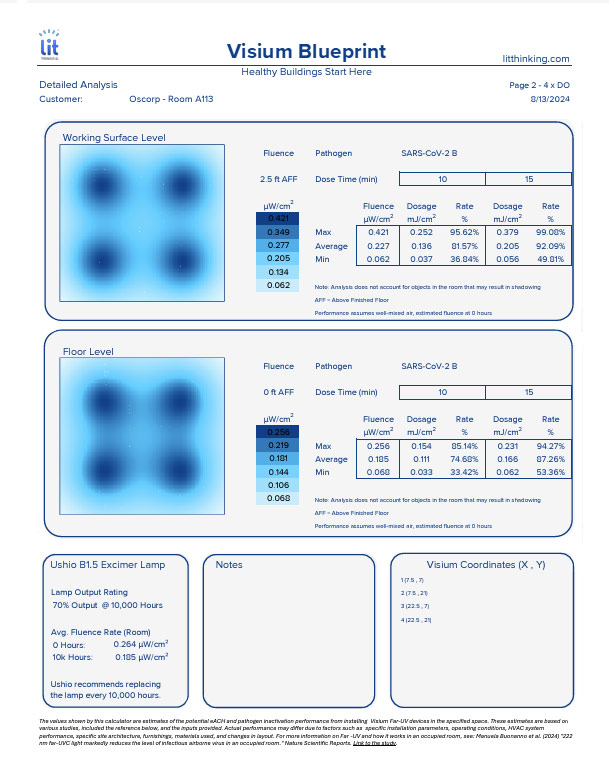
At Visium, we work directly with facilities to determine the optimal number of fixtures and installation locations in each room to ensure the best performance. Using basic room dimensions (length, width, and height) or a detailed floor plan, our team creates a custom Visium Blueprint Analysis – a tailored layout that models Far-UVC distribution and coverage to achieve consistent, effective results.
Each Blueprint includes a detailed report showing the Far-UVC dose throughout the space, the calculated equivalent Air Changes per Hour (eACH), and the predicted rate of aerosolized pathogen inactivation for both bacteria and viruses. This data-driven approach helps facilities understand the real impact of continuous Far-UVC on their environment of care and make informed design decisions for maximum effectiveness.
Learn More
Visium Far-UVC is a VA-approved technology for healthcare facilities and is offered in partnership with Lovell Government Services, a Service-Disabled Veteran-Owned Small Business (SDVOSB) that supports federal healthcare systems. Visium products are available through Lovell Government Services on the Department of Veterans Affairs’ Federal Supply Schedule (FSS), GSA Advantage, the Defense Logistics Agency’s Electronic Catalog (ECAT), and the Department of Defense’s Distribution and Pricing Agreement (DAPA), as well as through our network of trusted distributors.
To learn more about how Visium can be designed into your environment of care, contact us today.