
CASE STUDY
Reducing Patient Risk in the ER Waiting Room at Meadville Medical Center
Implementing Visium Far-UVC fixtures reduces
microbial load on high-touch surfaces.
OVERVIEW
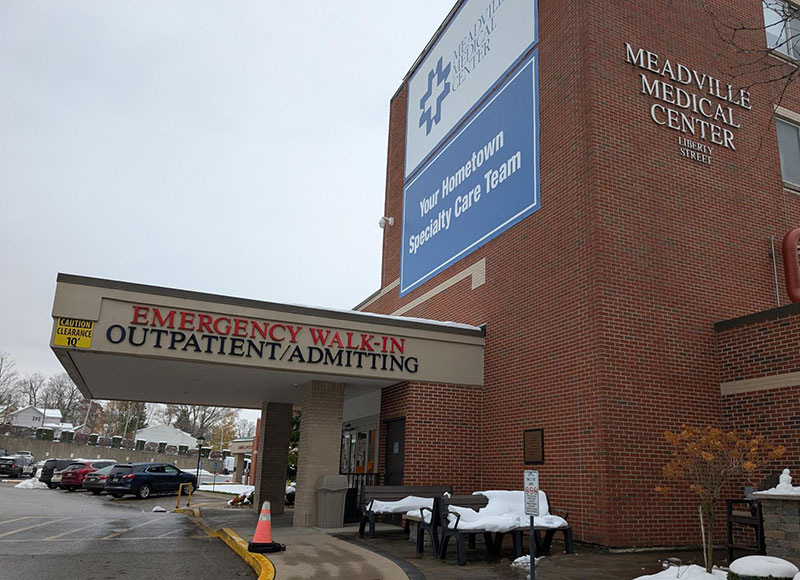
Meadville Medical Center (MMC) is a dedicated hospital serving 200,000 people in Crawford County and the outlying Northwest Pennsylvania community. As a trusted community partner, MMC is tirelessly committed to the highest of patient care, earning them recognition as one of just 10 hospitals in PA listed among the Top 5% in the country for patient safety.
Meadville Medical Center sought solutions to reduce bioburden on surfaces and in the air to continue leading the field in patient safety and outcomes. Visium Far-UVC was installed in the MMC Emergency Room, which provides care for approximately 38,000 patients annually.
THE CHALLENGE
Traditional terminal cleaning methods leave gaps in sanitation between cleaning sessions, allowing germs to accumulate on high-touch surfaces. With the addition of Far-UVC air and surface treatment, bioaerosols and surface microbes can be inactivated continuously, leading to lower risk interactions for patients and staff.
OUR SOLUTION: Visium Far-UVC Fixtures
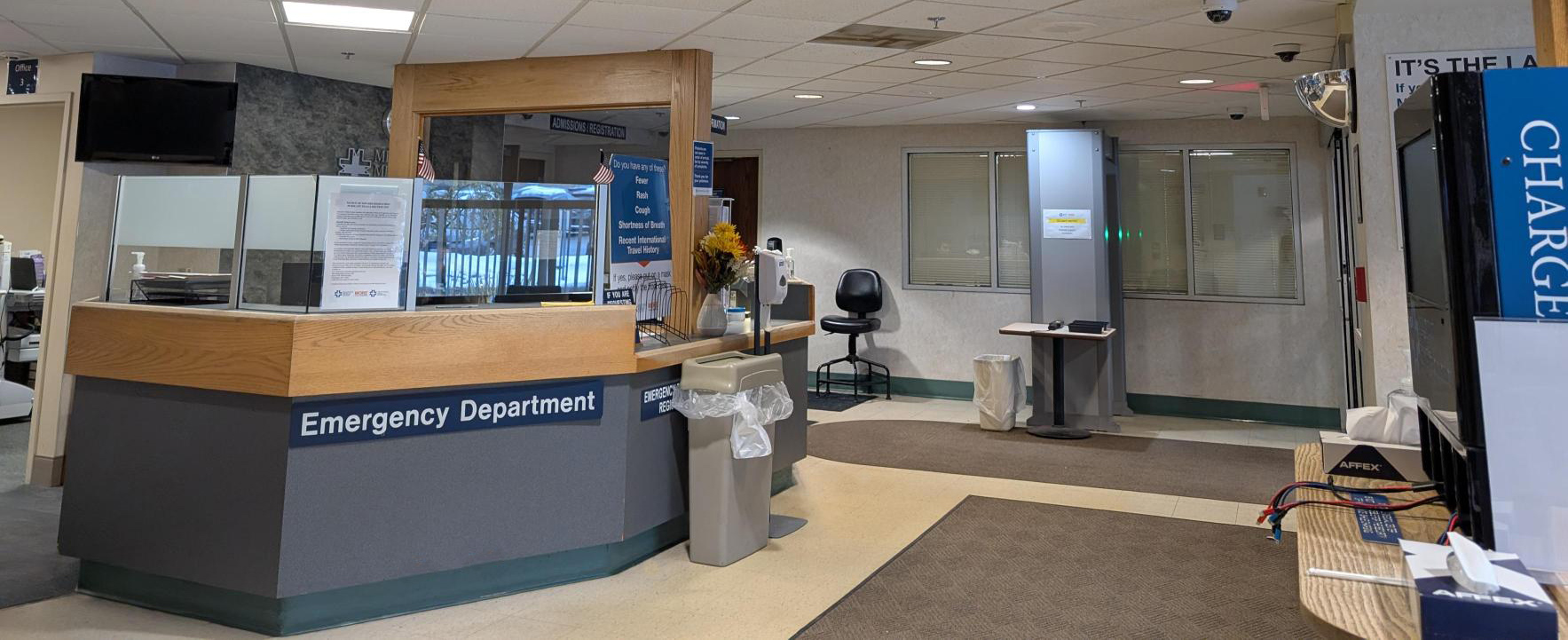
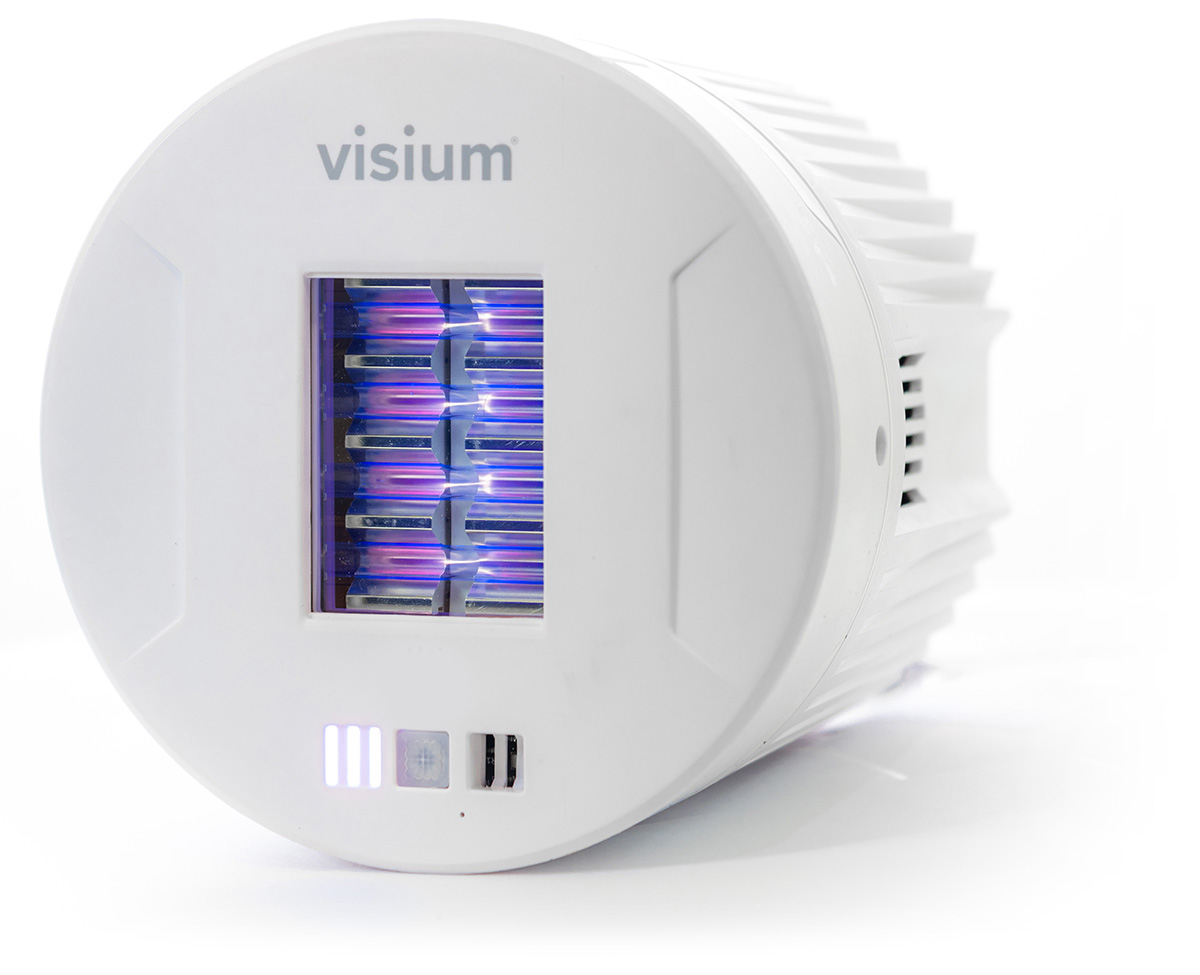
Eleven Visium devices were installed across the Emergency Room waiting area, focusing on intake areas and where patients are seated. Far-UVC continuously inactivates bioaerosols and surface bioburden, covering 525 sq.ft. of active space. Devices were recessed into the ceiling for seamless integration within the space.
KEY FEATURES
- Continuous 24/7 air and surface sanitization
- Far-UVC tech proven to reduce airborne pathogens
- Discreet and silent operation, for a patient-centered environment
- Visium app bridges IoT connectivity for real-time monitoring via mobile devices
Third-Party Test Results
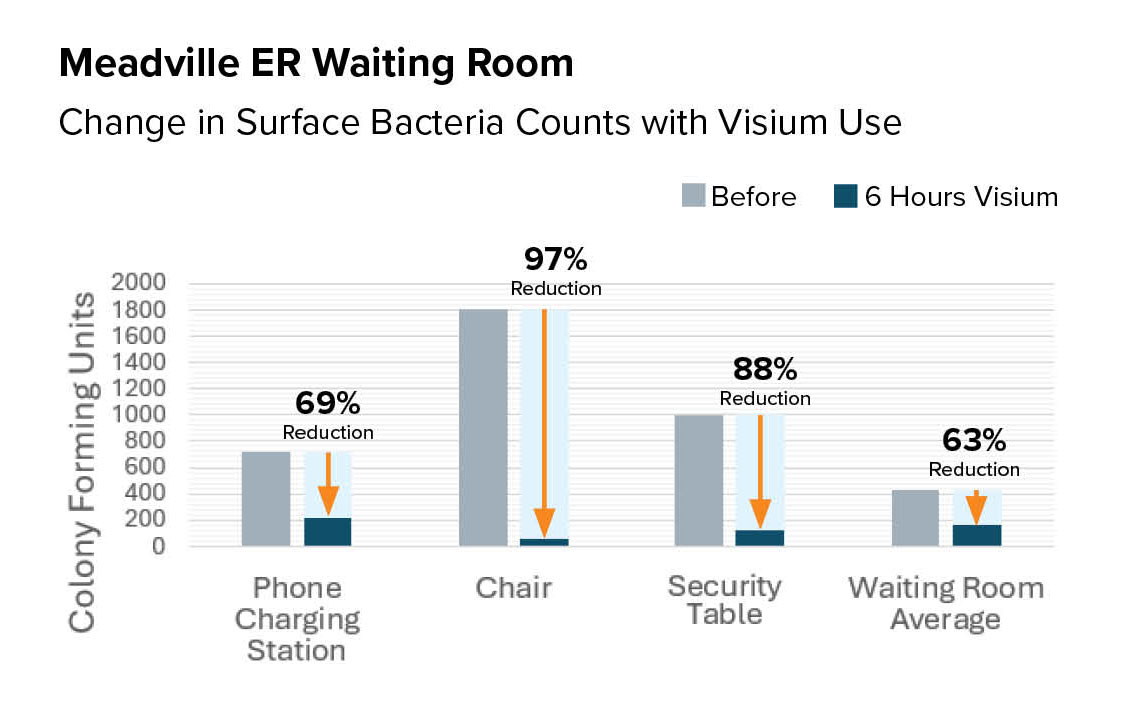
High-touch surfaces in the waiting room were sampled to assess changes in bioburden before and after Visium use. Baseline samples were collected from the same surfaces on the same day while patients and staff were actively using the space. Following baseline sampling, Visium fixtures were turned on, and repeat samples were collected six hours later. All samples were submitted to an independent laboratory, Culturewell, for quantification.
Fewer Bacteria
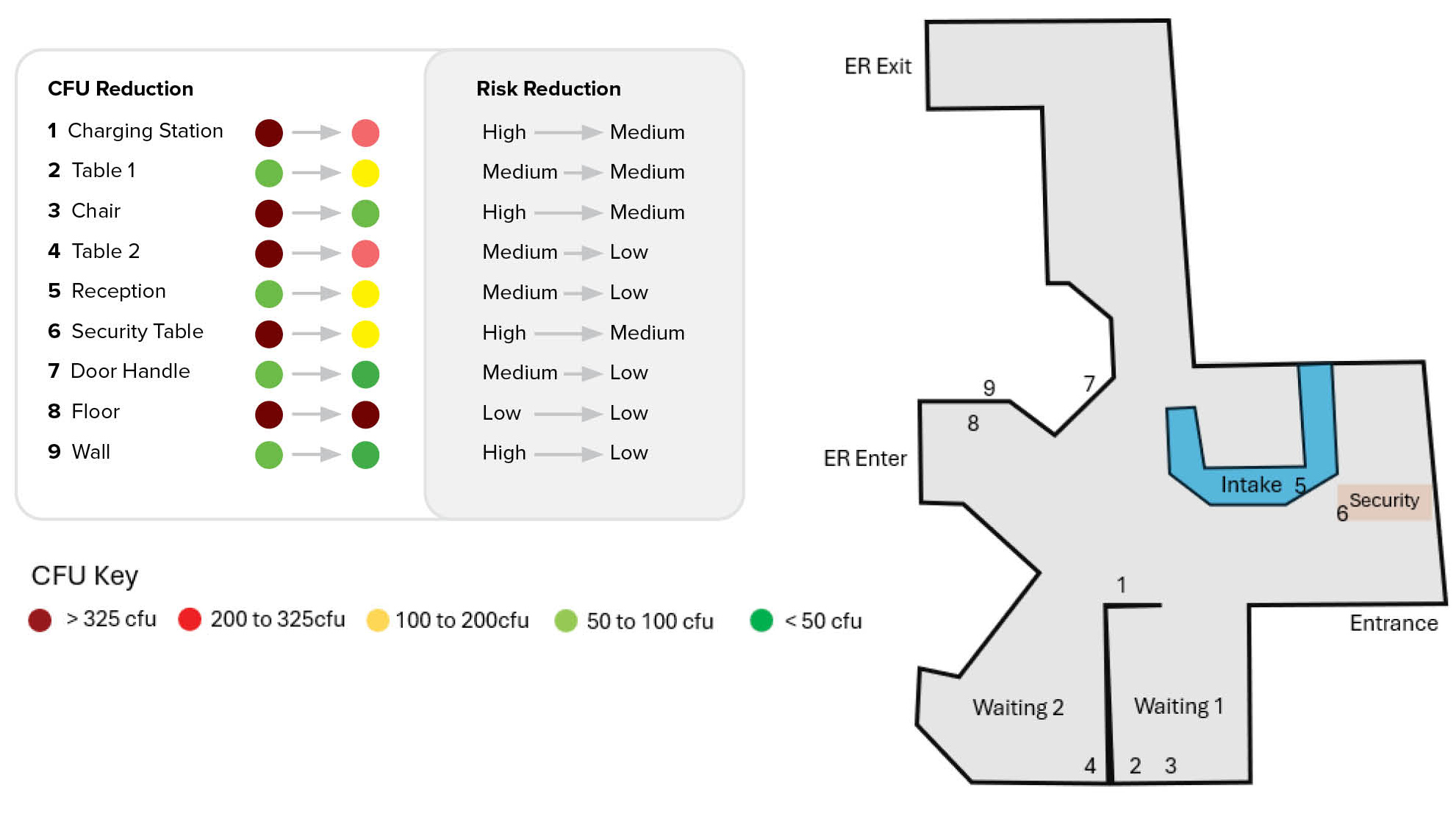
Results showed that Visium reduced bacterial abundance on high-touch surfaces by up to 99% compared to conditions without Far-UVC. On average, the waiting room experienced a 63% reduction in overall bioburden. Location-specific changes in colony-forming units (CFUs) are illustrated in the room diagram. The largest individual reductions were observed on a door handle and a chair in the waiting room. While some locations, such as the Security Reception area, showed higher CFUs after sampling, pathogen risk was lower, underscoring that CFU counts alone do not fully reflect surface safety. Reductions in high-risk pathogens indicate surfaces were safer for contact with Visium use.
High-Risk Pathogens Reduced
In addition to lowering total bioburden, Visium inactivated several high-risk pathogens on sampled surfaces. Risk profiles for each sampling location, based on identified organisms, are shown in the room diagram and demonstrate a room-wide reduction in potentially harmful pathogens.
Bacillus cereus group, a spore-forming bacterium commonly associated with healthcare-associated infections, was detected on five surfaces before testing and only one surface after Visium operation.
Enterococcus faecium, an indicator species for human waste contamination, was detected on a wall surface before Visium use and was not detected after treatment.
Roseomonas mucosa, an opportunistic pathogen associated with bloodstream infections and reported Far-UVC resistance, was detected at the phone-charging station before Visium activation but was not detected after, indicating the delivered Far-UVC dose was sufficient for inactivation.
Outcome
Visium integrated seamlessly into Meadville Medical Center’s facilities and existing hygiene protocols, providing continuous surface sanitization validated through biological sampling.
Achieved up to a 99% reduction in colony-forming units (CFUs), even during active use of the waiting area
High-risk pathogens, including Bacillus cereus, were reduced or not detected following Visium operation
After a full day of patient traffic, all sampled surfaces showed reduced or maintained risk profiles with Visium in use
Visium lowered overall surface bioburden while inactivating high-risk pathogens, reducing transmission risk to patients and staff
Conclusion
Meadville Medical Center is a high-impact, community-focused hospital committed to advancing patient wellness and maintaining leadership in quality care. Seeking a solution that would not compromise cleaning efficiency or disrupt Emergency Room operations, the medical center implemented Visium to enhance surface sanitation and reduce pathogen risk. Despite continuous use of the waiting room, surface bioburden was significantly reduced within six hours of Visium operation. In addition, high-risk pathogens were reduced or eliminated. Meadville Medical Center views Visium as a next-generation safeguard that strengthens patient care by lowering the risk of bioaerosols and respiratory illness transmission.
Partner With Us
We are actively working with new facilities that want to understand what continuous sanitization can do in their own environment.
If your organization is exploring ways to improve indoor environmental quality and reduce pathogen risk, we welcome the opportunity to collaborate. Our team will assess your space, recommend an appropriate Visium solution, and support your deployment to help generate real world results tailored to your facility.