
The Hidden Opponent
What Norway’s World Cup Illnesses Teach Us About Shared Indoor Environments in Elite Sport
At the highest levels of sport, every detail matters. Teams invest heavily in strength and conditioning, nutrition, recovery, sleep optimization, analytics, and sports medicine to maximize player availability and performance. Yet one variable continues to disrupt even the world’s best teams: respiratory illness.
Recent reports during the FIFA World Cup described multiple Norwegian players and staff experiencing fever, coughing, and flu-like symptoms during the tournament. While the exact cause was not identified, the story highlights a challenge every professional sports organization faces. Athletes spend countless hours together in shared indoor environments where respiratory pathogens can spread before anyone realizes someone is sick.
The question is no longer whether teams should invest in player health. The question is whether the built environment should be part of that strategy.
THE COST OF AVAILABILITY
Every coach understands a simple truth: Your best ability is your availability. A respiratory illness may not result in a season-ending injury, but it can still have meaningful consequences:
- Missed training sessions
- Reduced physical performance
- Altered match preparation
- Roster changes
- Increased risk of transmission to
teammates and staff - Disruption during critical competitions
Professional organizations spend millions to optimize performance. Preventing avoidable interruptions has become just as important.
WHERE EXPOSURE HAPPENS
While competition receives most of the attention, athletes spend far more time indoors than on the field.
Examples include:
- Locker rooms
- Team meeting rooms
- Position rooms
- Athletic training facilities
- Medical examination rooms
- Recovery spaces
- Weight rooms
- Coaches’ offices
- Team buses
- Charter flights
- Hotels
These are occupied spaces where people breathe, talk, laugh, cough, and spend extended periods together. Cleaning plays an essential role, but it occurs at specific points in time. The environment begins changing again the moment people return.
Why Cleaning Alone Has Limits
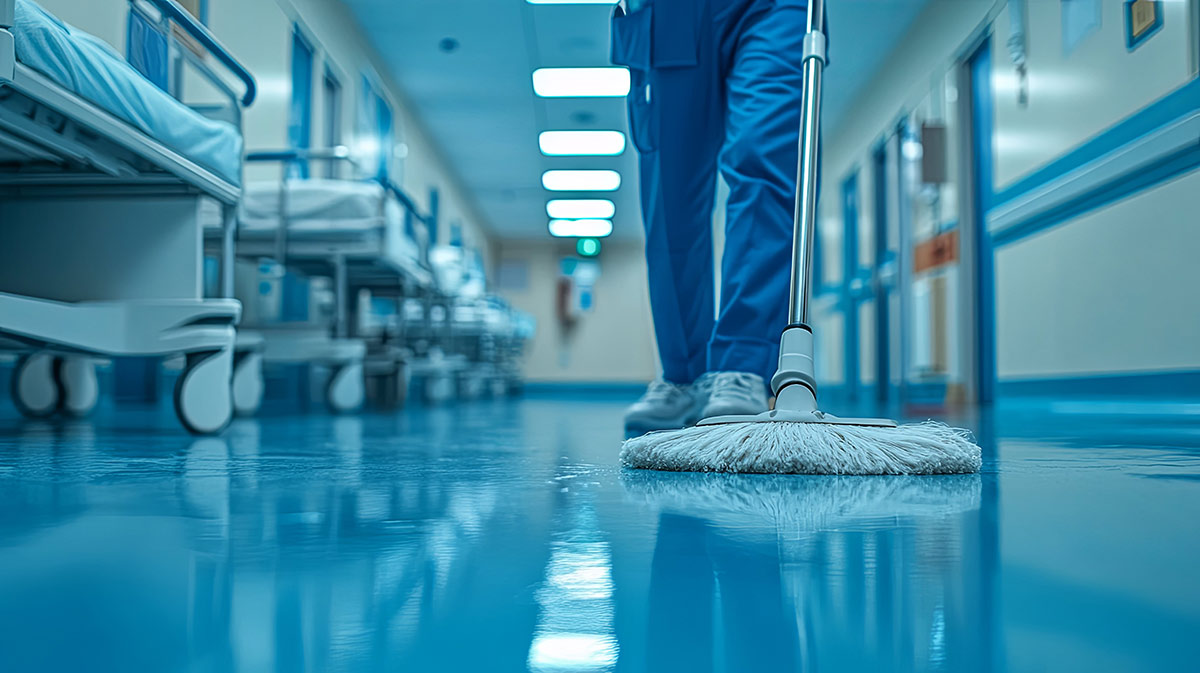
Environmental services teams work incredibly hard to maintain clean facilities. However, traditional cleaning has an inherent limitation: It cannot continuously address microorganisms introduced between cleaning cycles.
As occupants move through a facility, microbes are continually reintroduced into both the air and onto frequently touched surfaces. This is why many organizations are beginning to think beyond cleaning schedules and toward continuous environmental hygiene.
A New Layer for High-Performance Facilities
Far-UVC technology represents a different approach. Rather than replacing cleaning or HVAC systems, properly designed Far-UVC fixtures operate continuously in occupied spaces to help reduce microbial burden in both the air and on exposed surfaces.
This creates an additional layer of environmental hygiene throughout the day without interrupting normal operations. When deployed within established exposure limits and using appropriately certified systems, Far-UVC can be incorporated into everyday occupied environments.

REAL-WORLD EXAMPLE
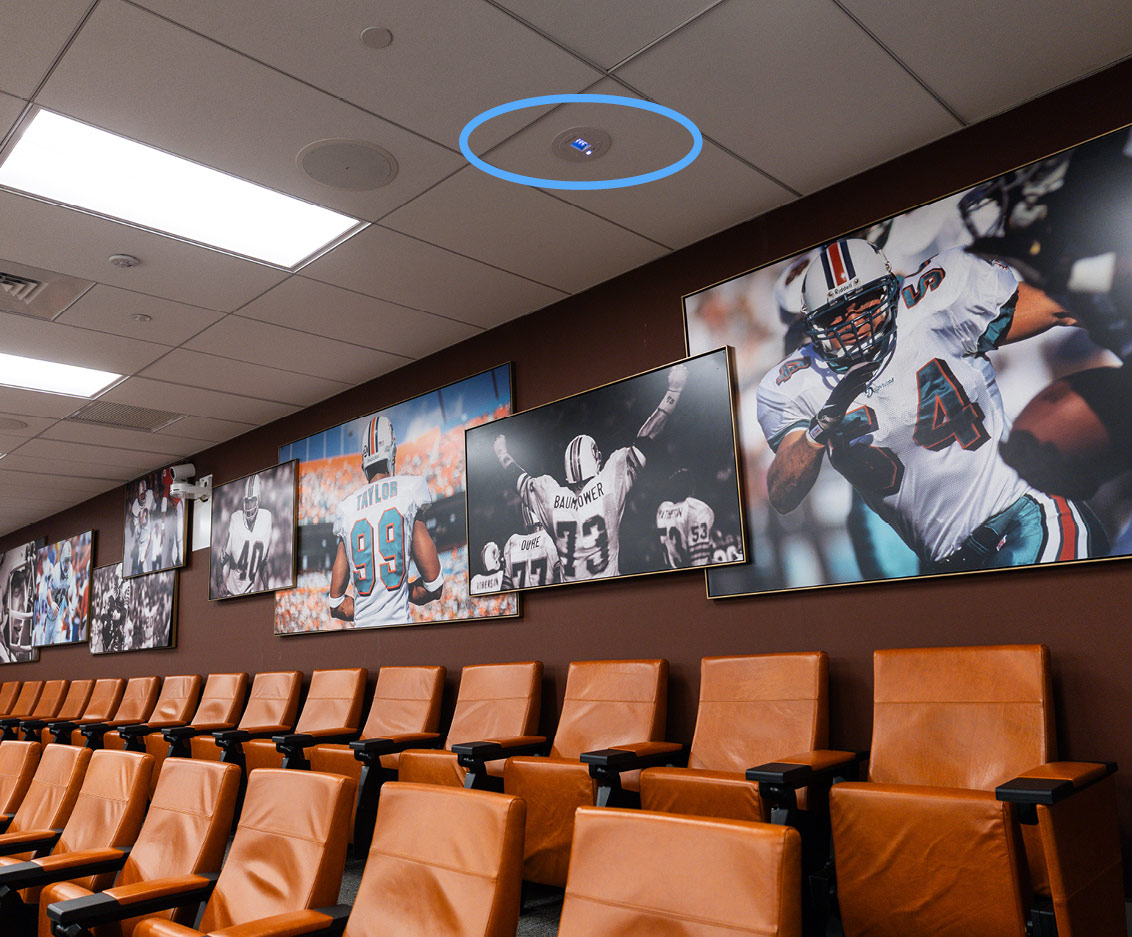
The Miami Dolphins have incorporated Visium Far-UVC technology throughout the Baptist Health Training Complex
Following an initial installation in training and examination rooms, the organization expanded the system into:
- Player position rooms
- Coaches’ offices
- Meeting spaces
- Additional high-occupancy areas
The expansion reflects a broader philosophy: Create healthier indoor environments where athletes and staff spend significant portions of every day.
Environmental sampling within the facility demonstrated meaningful reductions in microbial contamination on surfaces after continuous operation, including reductions on high-touch treatment tables and facility floors. The technology operates quietly in the background without disrupting players, coaches, or facility operations.
The Future of Performance Facilities
- Recovery science.
- GPS performance tracking.
- Cryotherapy.
- Sleep optimization.
- Nutrition monitoring.
Environmental hygiene is the next evolution. As facilities become smarter and more connected, continuous technologies that quietly improve the built environment deserve consideration alongside traditional performance investments.
Conclusion
No technology can eliminate every illness. But organizations can choose to reduce controllable risks. The conversation is shifting from treating illness after it occurs to creating environments that continuously support athlete health and availability. The most advanced facilities are no longer asking whether indoor environments matter. They are asking how to make them better.
About Visium
Visium is the leader in Far-UVC environmental sanitization technology. Using 222 nm Far-UVC light, Visium systems continuously reduce bacteria and viruses in the air and on exposed surfaces. Designed and certified for continuous operation in occupied spaces, Visium works silently and automatically to support cleaner indoor environments without interrupting normal activities. Headquartered in West Palm Beach, Florida, Visium serves healthcare, commercial real estate, professional sports, high-performance facilities, life sciences, and biosecurity applications in livestock and agriculture. Visium UltraLabs, located in Ithaca, New York, is the company’s advanced research and development group focused on semiconductor materials and next-generation Far-UVC technologies, including Far-UVC LEDs.